



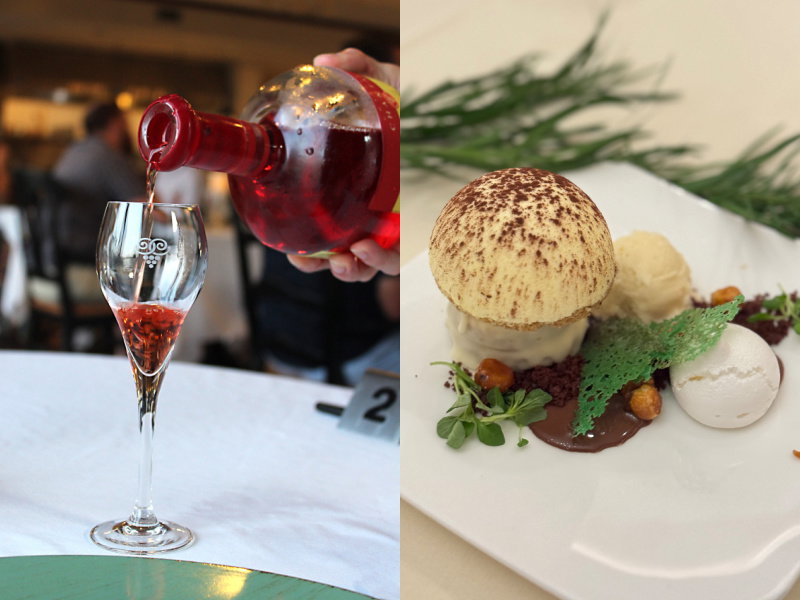
Michigan’s wine story is no longer just about what’s in the glass — it’s also about what’s on the plate.
While many wineries offer dining ranging from pizza and small bites to wine dinners, some take it a step further with in-house chefs dedicated to serving culinary masterpieces. These wineries have become dining destinations, satisfying palates through food as well as drink — and creating a whole that’s greater than the sum of its parts.
A Perfect Complement
At Chateau Chantal in Traverse City, Executive Chef Randy Minish says pairing food and wine is about more than matching flavors.
“A good pairing is something you can only have with food,” Minish says. “It’s not the food; it’s not the wine. It’s both. It’s an experience that neither one can give you on their own.”
Chef Sam Williams agrees.
“I spent a lot of time cooking on the line, … [and pairings] bring out a lot of great experiences,” says Williams, culinary director for Moersch Hospitality Group, which owns Tabor Hill Winery & Restaurant in Buchanan.
Dining can also elevate and complete a winery visit. Black Star Farms’ kitchens, inn, and event spaces make in-house culinary programming a natural fit to round out its offerings in its Leelanau County location.
“It allows us to provide a well-balanced experience for our guests — from breakfast to classes to dinner,” says Event Chef Leah Moerdyk, who is one of five culinary team members at the estate.
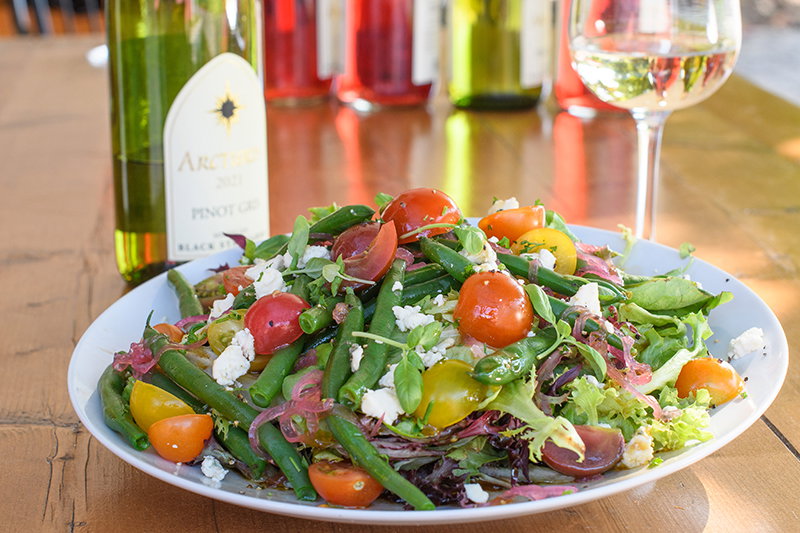
Beyond Cheese and Crackers
Black Star Farms’ culinary philosophy extends to inventive pairings and collaborative experimentation. Moerdyk says Black Star’s breadth of wines gives her the freedom to explore unexpected combinations.
“Unless there’s something really specific that [the tasting room manager] wants to pair a wine with, I’m able to have fun with it and then tweak anything [as needed],” she says.
That creativity came to life at a recent wine club dinner, which featured two of Black Star’s sparkling whites. Moerdyk created a mosaic tuna and salmon carpaccio bound with seaweed powder — a dish she says was “bright and fresh and looked gorgeous.”
Food not only complements but can also shine as “dinnertainment,” drawing the culinarily adventurous types.
“You come to taste the wine and enjoy southwest Michigan, but at the same time, you’re needing experience,” Williams says of visitors to Moersch Hospitality’s properties.
At Tabor Hill, that might mean a Hispanic-inspired fine-dining dinner, a Farm to Tabor event spotlighting local growers, or a Chilean sea bass with pistachio crust paired with the winery’s Albariño.
Creating New Favorites
Food pairings can also help showcase and increase appreciation of certain wines. Minish points to a recent eight-course Fire & Ice dinner that featured the winery’s entire ice wine portfolio.
Ice wine, he says, is one of northern Michigan’s calling cards. Rather than reserving it just for dessert, he pairs it with savory courses, too.
“We’re really able to take that part of the product catalog for a walk [with a range of dishes],” he says.
Creative pairings can even help win over guests who might be skeptical of a certain wine, Williams says.
“All of a sudden, it becomes one of their favorites.”
Minish says he loves inspiring people new to Michigan wine through his menu, including combinations like wild mushrooms paired with Pinot Noir — “Classic, classic, classic.”
From the Land
Some wineries grow or forage their own produce for their chefs, focusing on both health and sustainability.
Wellness has taken top billing at Gilchrist Farm Winery. Owners Marc and Elizabeth Huntoon, physicians by training, opened the Leelanau County winery and restaurant in 2023 with a farm-to-table focus from day one.
“We wanted to pair our wines with healthy food that’s approachable,” Marc says.
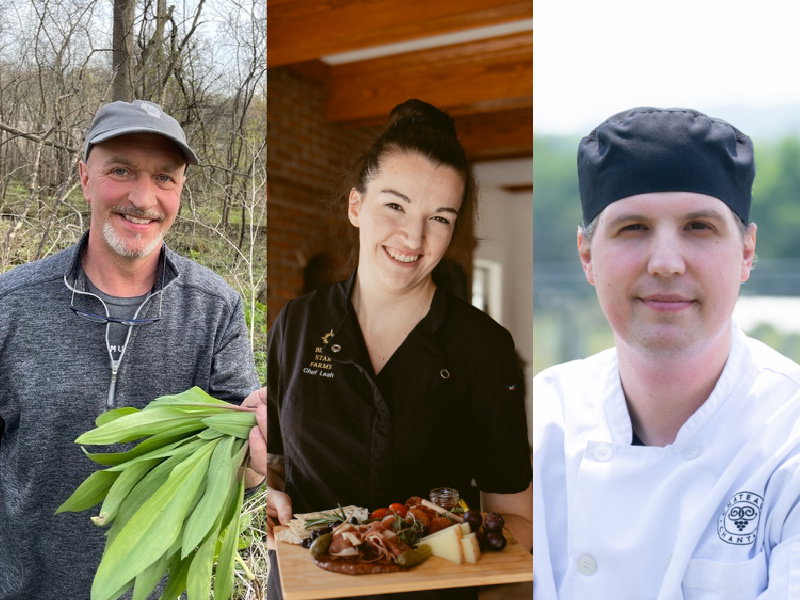
The couple grow produce in a three-quarter-acre market garden tailored to their chef’s needs. Executive Chef Joshua Sisco is “especially good at crafting dishes using our farm-fresh produce from our market garden,” Marc says.
At Veritas Estate Winery in South Haven, chef and co-owner Tim Schultz approaches food and wine as a partnership rooted in southwestern Michigan agriculture.
Schultz practices what he preaches. After harvest, he handpicks leftover clusters, transforming rescued wine grapes into small-batch jams and jellies.
He also forages mushrooms and pawpaw fruit, incorporating them into seasonal dishes and pairings, such as a white Cabernet Franc served with a specialty tiramisu featuring mushroom ice cream.
“It’s a lot of hard work,” he says of gathering plants from the property, “but we compost, and that includes grape products, so those grape skins and stems will be put back into the earth, which will help us produce our food, so it really does come full circle.”
It All Comes Back to Wine
Wine and winemaking byproducts themselves are sometimes used in the cuisine.
For a fall harvest dinner, Marc Huntoon says, the chef marinated beef short ribs in Red Deer, Gilchrist’s red table wine, then paired the dish with the same wine.
Minish borrows from the cellar in a creative way, using malic acid from the winemaking process to adjust acidity in desserts.
Black Star’s Moerdyk also incorporates winery byproducts, using dried barrel staves for smoking and verjus, which is created from pressing unripe grapes, for vinaigrettes, cocktails, and mocktails.
She also leans into hyperlocal ingredients, including those found right on the estate.
“We’re blessed to have tons of wild ramps on property,” Moerdyk says. “We pickle them, make pesto, grill them — I’m excited for the upcoming ramp season.”
For Moerdyk, those ingredients help tell a broader story about Michigan wine.
“What grows together goes together,” she says. “When you’re serving local wines with local produce, you get that locality and seasonality — and it elevates the flavor so much more.”
Schultz shares that viewpoint. “Great food and great wine separately are wonderful,” he says. “When you pair them together, it completes everything.”








Facebook Comments