


Talk to Michigan winemakers about nonalcoholic wine, and you’ll get nearly universal feedback.
Yes, there’s a market for it. A record-low 54% of adults report that they consume alcohol, according to a 2025 Gallup poll; for those ages 18 to 34, it’s 50%.
However, the equipment needed to produce nonalcoholic wine entails a substantial investment, easily in the hundreds of thousands of dollars.
Making it requires careful execution. Alcohol adds depth to a wine; removing it can affect taste and texture.
And nonalcoholic wine is not cheaper for consumers. It costs more to produce — after the wine is made, the alcohol (using that expensive equipment) is removed. Winemakers employ two main methods: vacuum distillation, in which wine is placed in a vacuum to lower the boiling point so that alcohol can be removed at lower temperatures, which helps to preserve the flavors, and reverse osmosis, in which a membrane is used to separate alcohol from the rest of the wine’s components.
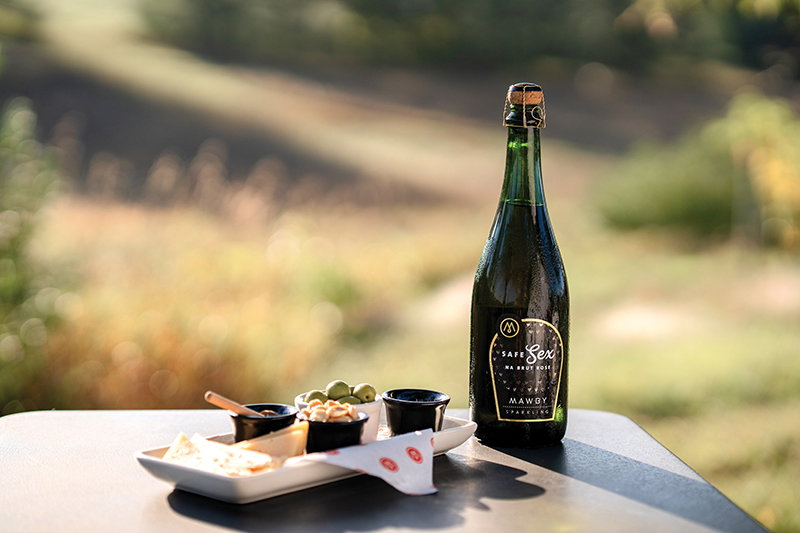
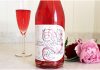
Despite the expense and difficulty, nonalcoholic wine is on Michigan wineries’ radar. Among those wineries is Mawby on the Leelanau Peninsula, which rolled out a nonalcoholic version of its bestselling Sex sparkling brut rosé in late 2024. The team called it Safe Sex, making it with Chardonnay grapes.
“The growth of that [nonalcoholic wine] category drove it — and the fact that we really want to be a brand that is delivering sparkling beverages to everyone, and not everyone drinks alcohol, or not everyone at any given time,” says Mawby co-owner Mike Laing. “We thought we should get into the space and put our own spin on it.”
Mawby found partners in California who had a low-temperature, low-pressure vacuum filtration system used to extract alcohol from wine. Even then, it was a process of trial and error and seeking feedback from customers. Selling at $19 — the same price as Sex — Safe Sex has been successful and represented 6% of Mawby’s total volume of wine sold in 2025, according to Laing.
Jenn Wozniak is the director of marketing for Moersch Hospitality Group, which operates Round Barn and Tabor Hill in southwest Michigan. She says the company is producing a nonalcoholic sangria that has struck a chord with tasting room visitors who are sober, designated drivers, or pregnant, among others.
“They don’t just want to have water, pop, or lemonade,” Wozniak says, noting that any cocktails on the menu can also be made into mocktails. “When they find out we have these types of offerings, it does make them happy.”
Moersch didn’t invest in extra equipment to make it happen, she notes. It was “just a great recipe development team.”
Black Star Farms on the Leelanau Peninsula offers a sparkling grape juice in a wine bottle, but it’s not wine, says managing owner Sherri Campbell Fenton. She says it’s ideal for celebrations.
Additionally, the winery’s cocktail program includes other nonalcoholic options. “Many of our guests come after visiting other wineries and would like to share a drink with their friends but don’t want more alcohol,” adds Christopher Lopez, retail sales manager.

While Paw Paw-based St. Julian Winery & Distillery has also been making sparkling nonalcoholic juices for decades, Nancie Oxley, vice president of winemaking, says the winery isn’t producing nonalcoholic wines because of the prohibitive cost of equipment and the challenge of getting the wine to balance as it should after alcohol is extracted.
Instead, St. Julian has invested in a line of juice-based bottled mocktails. Those came out at the start of 2026 and are available in the winery’s tasting rooms and at retail outlets.
Chateau Chantal on the Old Mission Peninsula outsources the dealcoholization of the four nonalcoholic wines it’s producing, using two companies that apply different processes to see how results might differ. All were going into distribution at Meijer stores by May. So far, President and CEO Marie-Chantal Dalese says, Chateau Chantal’s 0% sparkling brut has been the most popular, and it also took home a judges’ selection award at the 2025 TEXSOM International Wine Awards.
Dalese says Chateau Chantal has considered investing in the equipment to complete the process on-site but is taking a wait-and-see approach.
“Is it a trend or here to stay?” she says. “It’s probably for the long haul as consumers decrease alcohol consumption for a variety of reasons.”
If any wines can succeed in this category, she believes Michigan’s likely can. “Michigan wines are a good starting point given the higher aromatics from our whites,” she says. “They seem to produce a more wine-tasting end product than some of the others we’ve comparison-tasted from the shelf.”



)
Facebook Comments