


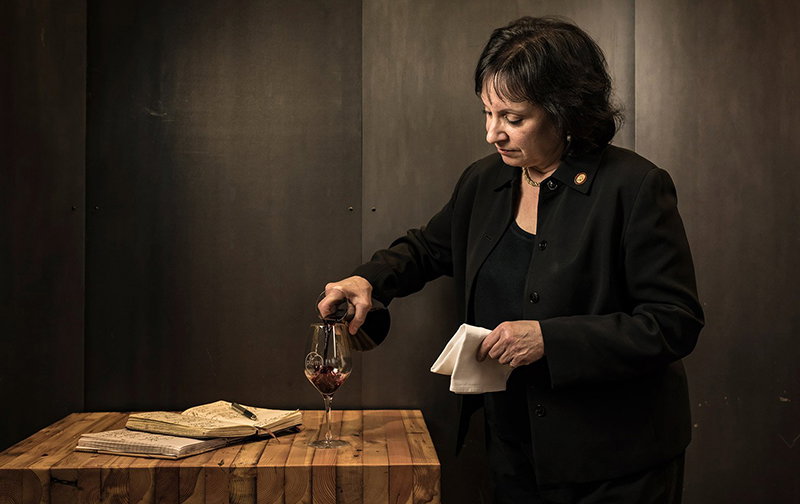
When Madeline Triffon passed the exam to become a master sommelier in 1987, Michigan’s wine scene was a much different place. Now, almost 40 years since becoming the first American woman to earn the distinction, Triffon — Plum Market’s in-house master sommelier since 2011 — reflects on Michigan’s wine evolution and the current landscape.
Editor’s note: This interview has been edited for length and clarity.
Michigan Wine Country: How did you get your start in the world of wine?
Madeline Triffon: I really tripped into it. I went to the University of Michigan, and I was dragging my feet going to law school or medical school. I applied to the Renaissance Center when it was being built, and I got hired as a sommelier before I even knew what the word meant. They offered me a position as a sommelier in their French dining room. I was 21, and I spent the next few years committed to trying to live up to that professional designation. Then, I went to the original London Chop House and later worked for Jimmy Schmidt at the Rattlesnake Club.
What are the biggest changes you’ve seen in Michigan wine through the years?
Michigan wines are being entered in international competitions. I routinely participate in TEXSOM — a judging in Dallas — and Michigan has been getting national attention at competitions like that. Several years ago, Sean O’Keefe, who used to be the winemaker at Mari Vineyards, won international acclaim for his Riesling. It’s not uncommon for the wineries to see their wines on lists in Chicago or New York.
How has the perception of Michigan wine changed from a consumer standpoint?
A lot of consumers, and I’m generalizing, may have an impression of Michigan wine born out of their tasting room experience a decade or two ago, and it’s a barrier to them being receptive to how good Michigan wine is at its best. Until someone like me, with a smile on my face, says, “Taste this.”
What are some of your favorite Michigan wineries?
I’d include Black Star Farms, Shady Lane Cellars, Mari Vineyards, and Left Foot Charley — without hesitating. If people wanted to check out wineries, these are the ones where you can try anything they make and it’ll be good. And in the southwest, too: Modales is really a wonderful winery worth paying attention to, and Wyncroft’s been doing it a long time in Fennville.
What are a few tips you would offer consumers for buying wine?
This applies to the world of wine, not just in Michigan, but raise the bar a little. You don’t have to spend $40, but $15 to $25 will get you something good at retail. I would encourage Michigan consumers to go on wine tours in Leelanau, Old Mission, Traverse City, or the southwest. When they go to wineries, ask whoever is doing the tasting, “Can you show me one that you’re most proud of?” Approach it that way because it’s a lot easier to have a tasting portion as opposed to committing to a bottle with your fingers crossed.





Facebook Comments