



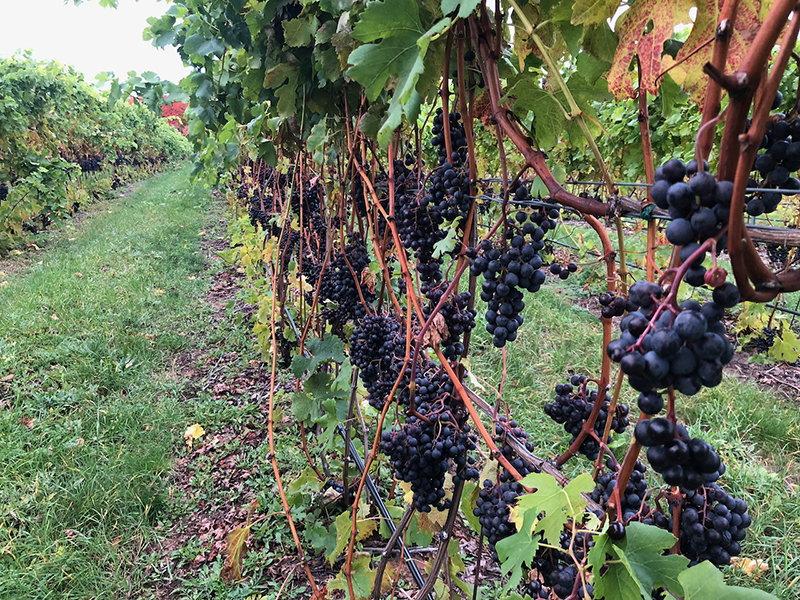
There is a persistent myth that Michigan winemaking begins and ends with crisp, vibrant whites. However, the state’s vineyards are harboring a “red-hot” reality. While critics and consumers once dismissed Michigan as too cold for world-class reds, the national wine scene is finally taking notice.
Recently, Forbes shined a spotlight on the Leelanau Peninsula, awarding stellar 93-point scores to red wines from Verterra Winery, Black Star Farms, and Boathouse Vineyards. From elegant Pinot Noirs to aromatic Syrahs, these bottles prove that Michigan reds have stepped out of the cellar’s shadow.
This momentum was further solidified by the 2025 Taste Michigan Governor’s Cup, where a red wine — Cherry Creek Cellars’ 2023 Charamar Collection Pinot Noir — took home the grand prize.
Distinct Regions, Distinct Wines
Because Michigan’s geography spans a vast north-to-south distance, the state’s viticulture can be defined by several distinct microclimates — and five American Viticultural Areas. Success in these regions is no longer a matter of luck but of precisely matching the grape to the “dirt.”
“Those regions have now settled into a set of really wonderful reds that thrive in those specific climates,” says Paul Hamelin, co-owner of Verterra Winery and a Michigan Wine Collaborative board member.
Hamelin notes that the industry has matured past its infancy. “We’ve moved past the experimental phase. We’ve finally identified the right grapes for the right soil, and the focus has shifted from simply surviving the winter to mastering the craft of winemaking itself.”
The South: Sun and Spice
In southwestern Michigan, the growing season gets a head start. Bud break typically begins in late April — two to three weeks earlier than in the north. While this early start leaves vines vulnerable to unpredictable spring frosts, the cumulative heat allows bolder varieties to reach full maturity.
According to Amy Birk, winemaker and operations manager at Domaine Berrien Cellars in Berrien Springs, the stars of the south are Cabernet Franc and Merlot. “Cabernet Franc is beautifully suited to Michigan,” Birk explains. “In our sunnier environment, those raw green pepper notes ripen into roasted pepper, black pepper, and even a hint of licorice.”
She also notes that Michigan Merlot often possesses a food-friendly balance that eludes its California cousins, maintaining a lower pH and bright acidity that keeps the wine refreshing rather than heavy.
“I find more and more people nowadays are surprised by the quality of Michigan reds,” says Birk, who is passionate about Syrah, which is “not the easiest grape to grow” and not common in Michigan. It may be the most dramatic grape in Domaine Berrien’s vineyards, but “the wines are absolutely gorgeous,” she says.
The North: Elegance and Resilience
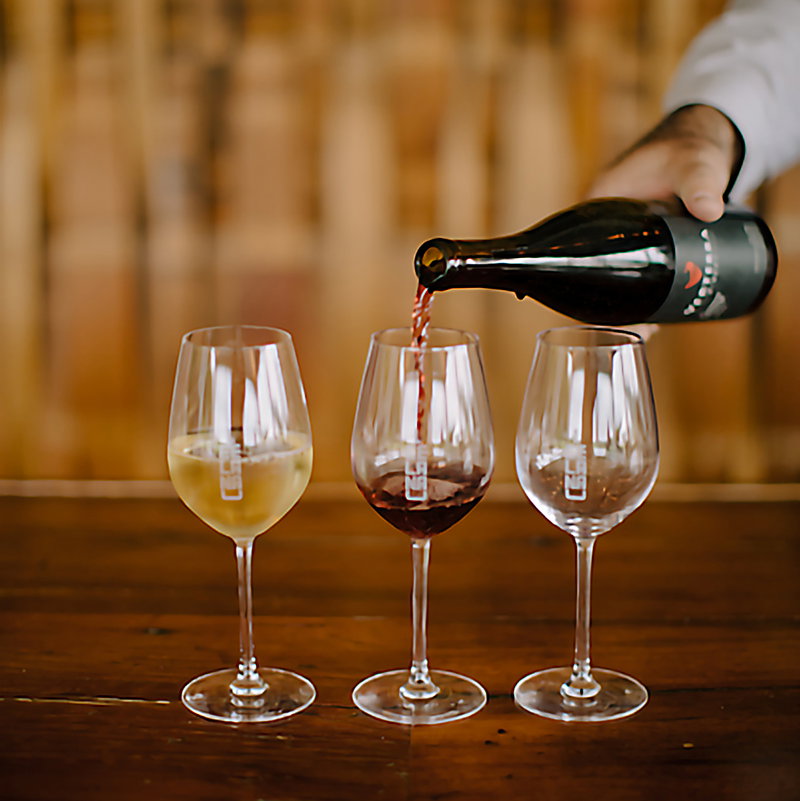
Farther north, on the Leelanau and Old Mission peninsulas, the focus shifts toward complexity. Here, varieties such as Cabernet Franc, Pinot Noir, Merlot, and Gamay Noir thrive. Even farther north, at the “Tip of the Mitt,” which is its own AVA, vintners often rely on Marquette — a cold-hardy hybrid and distant relative of Pinot Noir designed to withstand the harshest arctic blasts Michigan can deliver.
Gold Standard
The era of thin, overly acidic Michigan reds is in the past: “Fifteen years ago, it was almost unheard of for a red from northern Michigan to score a 90,” Hamelin says. “Now, it’s a regular occurrence. We aren’t just wishing for quality anymore; we’re producing it.”
Dave Bos, co-owner and winemaker at BOS Wine Garden in Elk Rapids, is an advocate for the power of the blend. His signature Shipwreck — a marriage of Pinot Noir, Blaufränkisch, and Lagrein — is pleasing palates across the region, Bos says. By blending varieties, Michigan winemakers are crafting a compelling new profile that offers complexity and consistency, regardless of the vintage.
As growers continue to experiment with varieties like Malbec and Blaufränkisch, one thing is fairly certain: Michigan’s red wines will continue to surprise the world — one bottle at a time.
Greg Tasker works part time as a wine educator on the Leelanau Peninsula. He has written about Michigan’s wine industry for The Detroit News, Michigan Blue, and other publications.
A version of this article originally appeared in the 2026 Michigan Wine Country magazine.






Facebook Comments